Showing posts with label accuracy. Show all posts

Monday, April 12, 2010

Truth Be Told, Aden Cruz

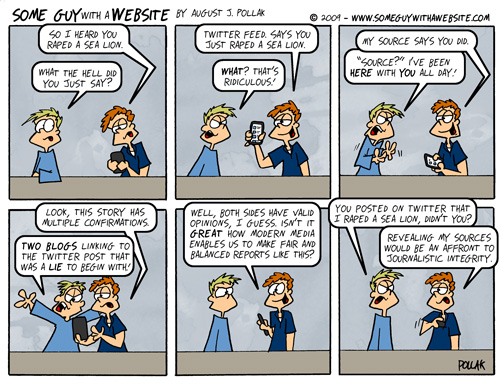
Fact checking is crucial to good journalism, and though editors offer some support and guidance in ensuring accuracy, reporters are still responsible for guaranteeing the correctness of his or her story. Journalists need to have a very clear understanding of their sources, knowing the credibility and understanding where the information is coming from is important. Reliability of reference sources is also key, a reporter should never assume that a document, official or not, is accurate.


Steven Wagers conveys the importance of fact checking in his blog post as he asserts that,“[h]aving an article properly edited is essential to a story. If the article is filled with false facts, readers might lose trust in that particular news publication, and rightfully so. The publication isn't the only one at a loss either. The journalist also loses credibility, and if they ever need to find a new job, they could run into problems if they build a reputation of presenting false facts.” Journalist must at all times exercise good judgment before using any type of sources as the reputation of the story, reporter, and most of all the publication depends on it.


Fact checking is a necessity, not an option. No journalist or publication can afford to turn out copy with false information and suffer legal ramifications. Reporters need to be skeptical of the source’s intentions and goals, be aware of biases, and be cautious that there are no holes preventing the story from being balanced. When people give quotes, verify the story behind it.


Detecting inaccuracies, however, isn’t quite so easy when there’s very little time to confirm all the information. This is a problem that many bloggers face because bloggers often operate on their own without help from an editor or fact checker. But, despite the legitimate time constraints, readers want and need accuracy in what they read.


Notes
Image Source: z.about.com

External Links (also in copy)
How to fact check and article: ehow.com

Internal Links (also in copy)
Steven Wager's blog post

Saturday, April 10, 2010

Importance of Accuracy, Shannon Findlay

Life is full of stories. There are fictional stories told to entertain, stories told between friends, gossip between strangers, and then there are news stories shared with huge audiences. Each of these has value to someone, but a defining point between news stories and all the rest is the need for accuracy. News organizations pride themselves on being able to deliver the facts, objectively and accurately. They want the world to hear their stories and know that they can believe it. Reputations for fair and honest news are staked on the fact that stories being put forth have been checked and found true.

Fact: humans are fallible. Fact: humans write news stories. By extension, the assumption can be made that news stories are likely to have mistakes in them. Journalists working at full speed to find news, write about it and then get it out to the public with minimal wait time is a recipe for error. We cannot deny that publications often run reprints and apologies for the inconsistencies that show up. The only thing we can do is to learn from mistakes and try not to make them in the first place. Just one mistake can be the catalyst for an audience to wonder whether everything you've written has been accurate. Megan Perras spoke on such outcomes of a mistake saying, "the reader no longer respects what they [the writer] writes, no matter how true or worthy their opinion."

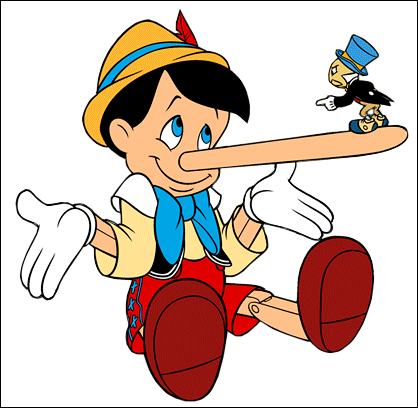
In matters of accuracy, it is better to double check than to make a mistake. Being first to report something is important, but being accurate is even more so. The online Handbook of Journalism says, "It is our job to get it first but it is above all our job to get it right. Accuracy, as well as balance, always takes precedence over speed." What value does the fastest news have, if it is incorrect? None. Audiences may want speed, but even more so they want truth. When a reader doesn't know that they've been told something untrue, they will not know to check the fact. A journalist cannot let down their guard for even a moment. It is at such times when sloppy errors begin to discredit their byline. Always remember to be objective, be timely, but most importantly be accurate. The work you do is a reflection of your character. Audiences will recognize your diligence and respect you for it.

*note: image from huffingtonpost.com

Tuesday, March 2, 2010

E-Portfoliao - The Brothers Twin


Nathaniel Hawthorne is quoted as saying: "Accuracy is the twin brother of honesty; inaccuracy, of dishonesty." The truth of that statement is quite evident as the example of people like Stephen Glass come into the light. Although Glass may be an extreme example, by his own admission, only a few fabricated details could be found in some of his earlier publications. It was over time that he began to create entire stories. While misspelling a name is most likely not as bad an issue as inventing an entire story, it is still not a good idea.

As Megan Perras said: "Accuracy is imperative in journalism, because it creates a trust and respect relationship between the writer and the reader." Without that relationship readers will go elsewhere to consume the news. That is why inaccuracy can be just as bad as dishonesty.

Tuesday, February 9, 2010

Evaluating Ryerson.ca/journalism, Kris Hoyt


Overall Content:


The point of the website is ultimately to advertise the journalism program in Ryerson University. It mentions that the students learn their trade on the streets under the tutelage of professionals. As it has a list of all faculty, I can search to see whether or not this is true. It also claims that the magazine the program publishes won awards, although the actual site for the magazine does not make any reference. It also states that journalists claim that the school is one of the best, but they do not mention any specific professionals.


Author:

The author of the site is presumably under the employ of Ryerson University, and the site is obviously made to promote the University. The purpose of the site is to convince people interested in the Journalism program to attend their School.Links:


I could not find a specific author.


Links:


Most of the relevant links lead to other Journalism sites. These sites include Poynter and other such sources, looking at journalsim itself and smaller issues that fall under journalism, such as religion.


Evaluating "To Find People, Think Before You Click", Ricki Cundliffe, Megan Perras


Overall Content:

The purpose of the webpage is to inform the public as well as journalists how to properly search for a person/topic online. The information is factual due to the fact that it comes from a professional journalist. There is no product being sold, or organization being advertised.


The information is complete, the author is named, and his qualifications are as follows- Julian Sher is an award-winning investigative journalist in print, TV, radio, and on the Web, yet that doesn't stop him from not editing her work throughly: "Now imagine you tried to the same searches 20 years ago before he web existed." We found this grammatical error in his blog entry.


The intended audience is for any and all internet users, specifically journalists or writers or investigators.


Compare With Other Resources:


This blog entry is non-specific, but it is relative to online and it is online. Information concerning Internet usage should originate from online sources for convienience. You would not necessarily have to go through another source to verify Sher's information as he is a professional and he has working links to all of the websites that aid in an Internet search for your convenience.


Sher's blog was published on July 29, 2009. Historical materials are not necessary, though current sites and social networking links help ensure accuracy and timeliness.


Author:


Julian Sher is the creator and webmaster of JournalismNet, and is an award-winning documentary TV producer. He has written five books. He is also an Internet trainer and consultant for top media clients around the globe. As stated above, Julian Sher is an award-winning investigative journalist using many mediums.


The information given is factual rather than opinon and biased.


The website where his blog is posted is "People Search Pro", which may have some lucrative motivations.


You cannot directly contact Sher, but you can comment freely on his blog article.


Check The Links:


Sher intertwines links to websites aiding in people search within his blog. They are comprehensive links and they also give you a variety of choices in which internet search mode you would like to use.

Note: Image From: http://www.peoplesearchpro.com/journalism/images/juliansher2.jpg

Evaluating "The Journalism School-Columbia University", Claire Theobald


Overall Content:- The purpose of the web page is to educate the reader on the Journalism Program at Columbia University. Used to Advertise? Why yes, yes it is.
-The information on the web page is presumably correct (however, I don't feel like calling the university to grill them on the information on their web page. I'll just take their word for it)
-Although the specific author is not named (as in the creator) it is labeled with Columbia Universities brand, and contains in it extensive contact information.
Compare With Other Resources:
-As this website is hosted by Columbia University, and is about Columbia University, I would speculate that it may be a fairly credible source when it comes to facts.
-You for sure should contemplate a secondary source, just because the web site looks good doesn't mean you should throw tuition money at the all willy nillie.
-It seems to be current and up to date
-It seems to cover the program content fairly well, however it focuses merely on the positive aspects and does not give voice to those who may wish to raise concerns (for painfully obvious reasons)
Author:-Although there is no specific "author", the website does drop several names that can be used to verify it's credibility.
-Well, Columbia is pretty credible and a well known institutuion so it seems to be pretty well set in that aspect...
-Of course there is bias, it is advertising the Journalism program! It WANTS applicants
Check the Links:-The links are utilised mainly to navigate the internal structure of the Columbia website, specifically throughout issues that would concern Journalism students.

*picture stolen from the wiki

Evaluating "Canadian Press" Website, Steven Wagers


Overall Content
  • Web page has a bunch of news stories. I think that it is trying to sell itself to the reader. There is no advertising on the homepage.
  • Intended audience is anyone who is looking for news stories that were written by the canadian press.
  • Audience is directed toward Canadian news readers.

Compare with other resources

  • This site shows the most popular stories in certain genres (Health, Sports, etc.)
  • The website seems very polished and it is nice to look at but I think that if I was looking for news, I would probably look elsewhere first.
  • The website may be preferable for Canadians because they seem to publish only Canadian stories.
  • Canadian Press itself has been around since 1910 but they started using the internet in 1997.

Author

  • The authors work for Canadian Press which is a well known news publication in Canada, and therefore I am willing to say that they are fairly trustworthy. I trust that editors have taken the time to look over stories and make sure they are factual and The writers themselves are probably no slouches either.
  • Bias is evident in that the news stories are strictly canadian. The information is clearly for educational purposes as it is a news site.
  • There is a section called "about us" that gives readers information about how Canadian Press goes about their business.

Links

  • Links are used mainly to get to the stories and do not stray from the website very much.
  • To verify the reader would probably have to use search engines to get the information needed as links to sources are not readily provided.
  • Links were last updated today (Feb 9).

Conclusion

  • I gotta say the website looks good, and for the most part it does what it is supposed to.


Evaluating "Wired.com/dangerroom", Kevin Penny

Overall Content
  • The content of the website is mainly related to American national security; however, there are several postings that relate to major world events. Mostly all of the postings have hyperlinks set inside of them to direct you to other information. The only advertisement seen on the website is a store dedicated to Wired products and a Haiti relief donation website. Although slightly satirical, the site directs its attention towards those concerned about the ongoing trials and hardships that the military undertakes every day.
Compare with other resources
  • This website provides quite valuable information on topics that would normally not be covered by mainstream media. Books or journal articles would be helpful, but the information would be outdated by the time they were published.
  • The website is preferable due to the fact that it provides timely information to a mass audience, and provides the additional sources needed for further reference.
  • The site dates back to February of 2007, while current and historical materials are provided by the hyperlinks when needed.
  • This site covers most topics relating to national security, and provides adequate hyperlinks for references.
Author
  • There are several authors of the blog, and the editor of the blog is also a contributing editor to Wired Magazine.
  • There is a slight bias against war efforts, but it is heavily laden in sarcasm. Mostly the blog is aimed at educating the public on what goes on with national security.
  • This blog is run by Wired Magazine, and the editor was a campaign staffer with the Bill Clinton presidential campaign.
  • The authors of the blog all have accessible email addresses, and the editor's number is easily obtainable online.
Check the Links
  • Hyperlinks are actively revised throughout each blog, allowing easy access to other forms of additional information.
  • These links are quite diverse, ranging from .gov and .mil websites to .org and .com, giving an objective view towards most posts.
Image taken from Dangerroom's twitter page.

Evaluating "CAJ: The Canadian Association of Journalists," Aden Cruz

Overall Content
  • CAJ's website is designed to inform and update CAJ members. It also provides the general public with information regarding what CAJ does, as well as ways to contact CAJ. There are also general information available regarding journalism, such as ethics, guidelines, and principles.
  • It was last updated January 2010, and is quite up to date.
  • The intended audience are those in the Journalism profession as well as those with related inquiries such as public relations.

Compare With Other Resources

  • Though information in this website appears to be accurate, it is very limited compared to other websites, like Poynter and J-Source, that provide more in-depth information in topics relating to journalism.
  • Secondary sources would definitely be needed as content is limited.

Author

  • The producer of the content is the Association it self.
  • Bias is not apparent as the site simply serves to inform for the most part. However, it is also designed to get members to join.
  • Under "contact", members of their executive committee is listed. They all appear to be working editors or journalists.
  • Affiliates include CNW Group, Globe and Mail, Toronto Star, Marketwire and CBC Radio.

Check the Links

  • The links are mostly internal.
  • Links to affiliates.

Note: Image from CAJ Website http://www.caj.ca/

Evaluating "Berkeley School of Journalism" -Devon Bowie


This is the home page of the Berkeley Graduate School of Journalism. Its purpose is to attract potential students, or give current students information. As an educational instuitution, the site can be trusted for accuracy.
The site is good in the Aristotelian sense, as it fulfills its purpose. It is not, however, a particularly good resource, and other sources would likely be better for most purposes.
The site is authored by professional writers working for Berkeley, and thus trustworthy.
The site has been recently updated, with a copywrite of 2010 on the bottom of the page.

Evaluating: "Poynter.org", Shannon Findlay and Katrine Sorensen.


Overall Content:


  • The website being published by the Poynter Institute (a journalism school) is free, but contains several advertisements of different kinds.

  • Authours of the articles are named, but their titles are not disclosed. The page was updated several times on the day of evaluation.

  • The site is intended for journalists, journalism students and other news junkies although this is not stated on the site.


Compare with other resources:


  • The website may not provide better content than written publications, the content is simply of another character.

  • Since the site is published by a journalism school, the audience can expect a fairly high degree of reliability.

  • The site (as many other websites) focus primarily on current information even though it dates back to 1995.

  • There is a multitude of various tools and information on the site, and the site links out to relevant information.


Author


  • Poynter Institute is the author of the website.

  • Poynter Institute is a school of journalism. PI is the owner of a company that publishes St Petersburg Times and Florida Trend magazine.

  • The content is meant to educate, and has an extensive list of corrections to their own articles.

  • The site is funded by advertisements on the page.

  • The Poynter Institute supports its own information.

  • It's an American institution that provides the page.

  • Contact information is provided on the website.


Check the Links


  • The site provides both internal and external links. The references are stated fairly clearly.

  • The newer links we tested all worked, but a link from a 1999 article disappointed us. Dates of revision are not posted on the articles.

  • The links do not seem to have been evaluated in any way.

"The Canadian journalism project" (Jennifer and Pam)


J-Source is a Canadian journalism site where journalists can find facts, opinions, tools, advice, and connections.


Overall Content


The prupose of the page is to present information about journalism and provide connections with others in the business. There is no reason for the information to be fabricated, there is also a long list of resources which can be used to to backcheck as well as links to original sources. There is no advertisments in the site to sway it on any point of interest. The author is clearly identified with current dates visible on all articles. This site is directed towards Canadian journalism and aspiring journalists from Canada offering information on schools, useful resources and mentors.


Compare with Other Resources


As compared to books and hard copy aricles this site runs circles around them. The information is up-to-date, visible in real time, and porivdes a wide range of information and topics related to Canada. It is easily searchable with a seach engine limited to this specific web site, and creates relevant and useful links to other places in the web. The web stie is news orientated therefore requires timely up-to -date information. Historical material is welcomed for refrence but not necessary.


Author


Authors differ by story, however the site was originally created in 1999 and has been well kept since with a large list of Editors and Managers. The founding Editor was Ivor Shapiro from the Ryerson University. The main editors are professors from Canadian Univeristies that teach Journalism. The authors have attempted from inform viewers of options for Canadian journalists and some of the issues related to being a journalist in Canada. The website is sponsored by The Canadian Journalism Foundation and leading journalism schools in Canada. It is a national project run by many instiutions in Canada. There is easily accesible contact information for the home office as well as the Editors.


Check the Links


There are no cleary stated rules for links, the majority of them seem to be up-to-date and in working order. They link to a range of information from all over the web that could be found elsewhere, but creates an easy atmosphere for curious poeople to investigate.


Monday, February 8, 2010

Lecture 6: Checking Facts and Forms of Bias

Outline:
Homework Review
Evaluate Websites
Forms of Bias
Blog Report 2
Homework


Chapter 5 Review:

With a partner:
Write a blog post responding to the following questions
Title: Chapter 5: Critical Interpretation, Student Names
Label: Lecture 6, Review
Interaction: Add a comment to another group’s Chapter 5 blog post

20 – 25 minutes

Purpose
  • What is this text about?
  • What does the author of the text want me to know or think?
  • What does the author want me to do?
  • Who would read or view this text?
Structures and Features
  • What structures and features are used in the text?
  • What does the design or style suggest about the text or about the audience of the text?
  • What do the images/figures suggest?
  • What kind of language is used?
  • What do the words suggest?
Power
  • Is the text fair?
  • Are there people or groups who are seen in a ‘good light’? Are there people or groups who
  • are not?
  • Whose interests does the text serve?
  • Who benefits from the text being read or viewed?
Gaps
  • Are there people depicted in the text who are ‘seen’ but ‘not heard’?
  • Who is not seen in the text?
  • Are there people for whom this text is not intended?
  • Does the text leave out or avoid certain ideas or issues?

Checking Sites for Accuracy:
Choose a journalism related website
Using the tips on page 99, evaluate the website for accuracy
Include your findings in a blog post
Title: Evaluating “Name of Website,” Student Name
Label: Lecture 6, accuracy, journalism 2.0, fact-checking


30 minutes


Types of Bias:

  • Political bias, including bias in favour of or against a particular political party, candidate, or policy.
  • Advertising bias, corporate media depends on advertising revenue for funding. This relationship promotes a bias to please the advertisers.
  • Corporate bias, coverage of political campaigns in such a way as to favour or oppose corporate interests, and the reporting of issues to favour the interests of the owners of the news media or its advertisers. Some critics view the financing of news outlets through advertising as an inherent cause of bias.
  • Mainstream bias, a tendency to report what everyone else is reporting, and to gather news from a relatively small number of easily available sources.
  • Religious bias, including bias in which one religious or nonreligious viewpoint is given preference over others.
  • Bias for or against a group based because of their race, gender, age, class, sexual orientation, or ethnicity.
  • Sensationalism, bias in favour of the exceptional over the ordinary, giving the impression that rare events, such as airplane crashes, are more common than common events, such as automobile crashes.

Critical Questions:
  1. What is the author's/speaker's socio-political position? With what social, political, or professional groups is the speaker identified?
  2. Does the speaker have anything to gain personally from delivering the message?
  3. Who is paying for the message? Where does the message appear? What is the bias of the medium? Who stands to gain?
  4. What sources does the speaker use, and how credible are they? Does the speaker cite statistics? If so, how were the data gathered, who gathered the data, and are the data being presented fully?
  5. How does the speaker present arguments? Is the message one-sided, or does it include alternative points of view? Does the speaker fairly present alternative arguments? Does the speaker ignore obviously conflicting arguments?
  6. If the message includes alternative points of view, how are those views characterised? Does the speaker use positive words and images to describe his/her point of view and negative words and images to describe other points of view? Does the speaker ascribe positive motivations to his/her point of view and negative motivations to alternative points of view?


Bias Activity:
Choose an event and locate 3-4 articles in different news sources. For example, if it is a Canadian story choose news sources from various regions of the country, if it is an international issue such as conflict in the Middle East select sources from various sides of the issue.
Some good websites include: www.newseum.org, www.onlinenewspapers.com and www.journalismnet.com/papers/canada.htm (Canadian Newspaper Index)
write a paragraph on whether there is bias in the news and give examples related to the chosen issue to prove your points

Blog Report 2:

Due: March 9th
Title: We Regret the Error, Name Surname
Label: Blog Report 2

Respond, using examples and in an academic tone:
“Journalists are conditioned to fear and avoid mistakes. This helps send the message that accuracy is important. From there, the best course of action is to help mitigate the fear by teaching practices and introducing tools that help prevent factual errors. Fear of mistakes doesn't lead to accuracy. In fact, one of the best ways to learn how to avoid errors is to make them in the first place. A study recently published in the Journal of Experimental Psychology: Learning, Memory, and Cognition is just the latest piece of research that suggests, as lead author Nate Kornell, an assistant professor of psychology at Williams College told me, that "making errors is the best way to learn information that you want to learn." Perhaps this sounds a bit confusing: fear is good, but also bad; mistakes are bad, but also instructive. That's exactly the point. Teaching accuracy is a multi-faceted process. It's complicated, and in truth it never really ends. You can't learn accuracy the way you learn to add and subtract. It's a process and a combination of learned behaviours, not a matter of memorization or motor memory.” ~ Craig Silverman

Include at least three mistakes made in Canadian newspapers (online versions)
Note the inaccuracy
Example:
“In a story on Page 3-A of Wednesday’s Independent about the Big Brothers Big Sisters’ Trail of Terror haunted house, a reaction to strobe lights should have included the word “freaking.” The word was replaced with asterisks, perhaps causing confusion about what was actually said. The Independent apologizes for this confusion and the impression it left.” — The Grand Island Independent

Homework:
Read Chapter 9
Read a current edition of the Huffington Post (the Feb. 22 of 23 issue)
Come with a topic for your e-portfolio


Note: Image 1 from Wristwatch Review, Image 2 from Unambiguously Ambidextrous.

Wednesday, January 27, 2010

Crap Detection, Megan Perras


Currency


I believe that this article was current as far as technology was concerned. There was a lot of references made to the past technologies as well, which I think aided in making the point that the evolution of information systems creates a need for an evolving information filter. It references twitter and other social media sites which are current and popular media tools. All of the links seem to be useful and working as well.


Reliability


The information provided is cautionary advice, and is expressed as such, which creates an opinion-based reliability. The opinion is backed up with facts and examples which can be checked. The article doesn’t need to be balanced because it is expressed as a personal opinion, but it has a large amount of sites which are helpful and truthful in checking information which you find on the internet. There are links for almost every topic the author discusses.


Authority


Howard Rheingold gives his email, so you have a chance to respond, which gives the reader the authority to create a dialogue. Also, there are areas for the reader to comment and participate in the discussion with others who have explored this topic. The author has a full biography with references and is an author, editor and professor. This creates an aura of credibility surrounding the article. The overall goal of the article seems to be to teach and inform the public about misinformation online and create a forum for discussion.


Purpose/ Point of View


Rheingold gives both fact and opinion within the article. The information is not biased, but seems to be a realistic opinion on how one should approach internet research. The author is selling an idea, but not for personal gain.

Tuesday, January 26, 2010

Fact-Checking Megan Perras


Full Story:
http://www.edmontonjournal.com/news/Alberta+Education+investigates+rumours+exam+cheating/2486975/story.html

After fact-checking this story, as far as I know it is accurate. The story is about an allegation of cheating, and is difficult to prove true or false. Zoe Cooper is the Public Affairs Officer at the Government of Alberta, and she is called the “department spokeswoman” in the article. Cory Sinclair is an Edmonton Public Schools spokesman. Both names are spelt correctly in the article. I could not find a way to verify the exact number of students that wrote the exam. Also, I could not find any news articles that spoke about the 2001 cheating incident in St.Albert.

Accuracy is imperative in journalism, because it creates a trust and respect relationship between the writer and the reader. If a writer uses inappropriate or rudimentary grammar, then they lead the reader to believe that they are inappropriate or rudimentary, not to mention unintelligent. The consequence to that is then the reader no longer respects what they write, no matter how true or worthy their opinion.

Backchecking, Jesse Snyder


Interview was recorded.


Name seems to be correct.


No insight as to where the numbers from the poll came, only states "according to a poll."


No available links to verify information.


Only one single source throughout interview.


Skinny women. Yes.


Attribution is sound.


Location is unimportant.


FACT CZECHIN' - Devon Bowie


Full Article Here

By Randy Boswell, Canwest News Service January 26, 2010 3:55 PM


This article taken from the Journal's site seems to be accurate and have no glaring errors. Thumbs up.

Accuracy is an important thing. It is, for one thing, central to one's credibility, and thus career. Additionally, to be inaccurate would go against the very ideal of journalism. Thus, you better check yourself, lest truly, you wreck yourself.

Fact-Checking, Terra


http://www.winnipegfreepress.com/breakingnews/UNICEF-closing-Winnipeg-office-82711202.html

This article just says it is writen by the "Staff Writer" and according to the CRAP test, we aren't able to see how credible the author is by using google to see what else he/she has done.

The statistics used in the article aren't backed up by any URL's or even supported by where the information is from.

The author does, however, attribute the quotes that are used in the article.

When I googled Sharon Avery's name, I was able to see that she did indeed work for UNICEF.

It is extremely important to be accurate and thorough because it helps with the writer's credibility. It is important for a writer to maintain a reputation of being accurate so that he/she will continue to have people who read his/her articles. People do not want to read articles that aren't accurate and many people don't have the time to fact-check every article they read. If they can simply trust what a writer writes it makes it more convenient for the readers in the future.

Fact Checking, Claire Theobald


After checking an article from the Globe and Mail called "Tim Trow to quit Toronto Humane Society board", I found the article to have no obvious errors. Quotes appear to be attributed properly, the spelling seems fairly consistent, and the facts are credible. http://www.theglobeandmail.com/news/national/toronto/tim-trow-quits-toronto-humane-society-board/article1445060/


Accuracy is what seperates news from rumour, therefore if a news source is to retain credibility as a news source, it must be fair, balanced, and accurate.


Fact Checking, Pamela Di Pinto


Here is my fact-checking mission as follows:

My article of choice, "Woman, 84, rescued after family hears cries," was published in the Edmonton Journal on January 23, 2010. It is one of the many hopeful survival stories surfacing in the news these days following the fatal earthquake in Haiti. In terms of fact-checking, the article "checked out," so to speak.

  • The numbers in reference to the quake are consistent with what has been reported thus far.
  • Names, titles, and locations appear to be in order.
  • Sources are well attributed.
  • Spelling and grammar were up-to-par with what I expected as a reader.

However, despite all of this, there were no external links within the story that allow the reader to physically confirm the above mentioned information. Including such links would have strengthened this story's accuracy and reliability. As well, there was no specific author mentioned. The byline simply read Agence France-Presse. Interesting...

In general, fact-checking is a crucial component to any successful piece of writing, especially in a field such as journalism. Even simple mistakes can set off a frenzy of skepticism in readers: Well, if they made a mistake in this article, have they made mistakes in the past? Will they in the future? The simple truth of the matter remains: No fact-checking=bad reputation=no readers=no career. You follow? Save yourself the trouble, and get your facts straight!