Showing posts with label lecture 4. Show all posts

Tuesday, January 26, 2010

Fact-Checking Megan Perras


Full Story:
http://www.edmontonjournal.com/news/Alberta+Education+investigates+rumours+exam+cheating/2486975/story.html

After fact-checking this story, as far as I know it is accurate. The story is about an allegation of cheating, and is difficult to prove true or false. Zoe Cooper is the Public Affairs Officer at the Government of Alberta, and she is called the “department spokeswoman” in the article. Cory Sinclair is an Edmonton Public Schools spokesman. Both names are spelt correctly in the article. I could not find a way to verify the exact number of students that wrote the exam. Also, I could not find any news articles that spoke about the 2001 cheating incident in St.Albert.

Accuracy is imperative in journalism, because it creates a trust and respect relationship between the writer and the reader. If a writer uses inappropriate or rudimentary grammar, then they lead the reader to believe that they are inappropriate or rudimentary, not to mention unintelligent. The consequence to that is then the reader no longer respects what they write, no matter how true or worthy their opinion.

Backchecking, Jesse Snyder


Interview was recorded.


Name seems to be correct.


No insight as to where the numbers from the poll came, only states "according to a poll."


No available links to verify information.


Only one single source throughout interview.


Skinny women. Yes.


Attribution is sound.


Location is unimportant.


FACT CZECHIN' - Devon Bowie


Full Article Here

By Randy Boswell, Canwest News Service January 26, 2010 3:55 PM


This article taken from the Journal's site seems to be accurate and have no glaring errors. Thumbs up.

Accuracy is an important thing. It is, for one thing, central to one's credibility, and thus career. Additionally, to be inaccurate would go against the very ideal of journalism. Thus, you better check yourself, lest truly, you wreck yourself.

Fact-Checking, Terra


http://www.winnipegfreepress.com/breakingnews/UNICEF-closing-Winnipeg-office-82711202.html

This article just says it is writen by the "Staff Writer" and according to the CRAP test, we aren't able to see how credible the author is by using google to see what else he/she has done.

The statistics used in the article aren't backed up by any URL's or even supported by where the information is from.

The author does, however, attribute the quotes that are used in the article.

When I googled Sharon Avery's name, I was able to see that she did indeed work for UNICEF.

It is extremely important to be accurate and thorough because it helps with the writer's credibility. It is important for a writer to maintain a reputation of being accurate so that he/she will continue to have people who read his/her articles. People do not want to read articles that aren't accurate and many people don't have the time to fact-check every article they read. If they can simply trust what a writer writes it makes it more convenient for the readers in the future.

Fact Checking, Claire Theobald


After checking an article from the Globe and Mail called "Tim Trow to quit Toronto Humane Society board", I found the article to have no obvious errors. Quotes appear to be attributed properly, the spelling seems fairly consistent, and the facts are credible. http://www.theglobeandmail.com/news/national/toronto/tim-trow-quits-toronto-humane-society-board/article1445060/


Accuracy is what seperates news from rumour, therefore if a news source is to retain credibility as a news source, it must be fair, balanced, and accurate.


Fact Checking, Pamela Di Pinto


Here is my fact-checking mission as follows:

My article of choice, "Woman, 84, rescued after family hears cries," was published in the Edmonton Journal on January 23, 2010. It is one of the many hopeful survival stories surfacing in the news these days following the fatal earthquake in Haiti. In terms of fact-checking, the article "checked out," so to speak.

  • The numbers in reference to the quake are consistent with what has been reported thus far.
  • Names, titles, and locations appear to be in order.
  • Sources are well attributed.
  • Spelling and grammar were up-to-par with what I expected as a reader.

However, despite all of this, there were no external links within the story that allow the reader to physically confirm the above mentioned information. Including such links would have strengthened this story's accuracy and reliability. As well, there was no specific author mentioned. The byline simply read Agence France-Presse. Interesting...

In general, fact-checking is a crucial component to any successful piece of writing, especially in a field such as journalism. Even simple mistakes can set off a frenzy of skepticism in readers: Well, if they made a mistake in this article, have they made mistakes in the past? Will they in the future? The simple truth of the matter remains: No fact-checking=bad reputation=no readers=no career. You follow? Save yourself the trouble, and get your facts straight!


Fact-Checking, Ricki Cundliffe


CHECKLIST:
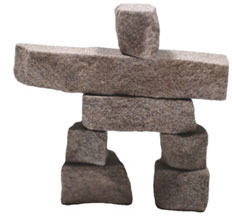
Ask sources to spell name & title: PROBLEM: "Inukshuks" is the English spelling. "Inuksuks" is the proper spelling.
Record or transcribe interviews: ---
Verify claims with reliable sources: CHECK!
Save links and other research: CHECK!
Ask sources what other reports got wrong: No other reports.
Numbers & Math: PROBLEM: The age's of Bruce's children are both under the number 10; therefore, they should be spelled out, according to CP Style.
Names: CHECK!
Titles (people, books etc.): CHECK!
Locations: CHECK!
Compare quotes to notes/recording: CHECK!
Quote Attribution: CHECK!
Definitions: CHECK!
URLs: ---
Spelling & Grammar: PROBLEM: "Inukshuks" is the English spelling. "Inuksuks" is the proper spelling.
Spellchecker Errors: ---

Accuracy and journalism truly go hand-in-hand. Without accuracy, there is no credibility. In turn, without credibility, there is not legitimate news. The biggest problem with inaccuracy is lack of time (and effort) in the proofreading stage. The reason news papers have editors is to preform this very task, and preform it well. There are certainly some things that go unnoticed, typically do to Spellcheck, but then again, editors should be the ones with the final say, NOT the computers.


Fact-Checking, Jayme

http://www.edmontonjournal.com/news/Record+high+travel+Edmonton+airport/2486203/story.html

This article, written by Dave Cooper, has statistics listed for flights from Canada to the United States. The problem is he does not attribute the source of this data. In order for this information to be able to be fact-checked he would have to list where he is receiving the numbers from. He lists his email, so contacting to ask about this glaring omission is possible, but the average reader will not do this. Unfortunately, he does not attribute any findings throughout the whole article. I would say this story fails the accuracy test simply because I am unsure of where he is getting his information. He also mentions a new non-stop flight to Liberia, which does not make any sense to me. A direct flight from Edmonton to Liberia?

Without accurate referencing a person has to assume the article is not based on fact. It is important to check whether what you are reading is fact without blindly assuming it is correct. The internet has many unreliable writers on it and fact-checking is more important than it has ever been.

Fact Checking, Created Through Hard Work and Sweat Done by Steven Wagers

So, I am here to try my hand at being an editor for a news story that is currently online, I mean what could possibly go wrong?

The article is called Horcoff evidence of what ails Oilers and is on the Edmonton Sun's website at http://www.edmontonsun.com/sports/myoilers/2010/01/25/12610681.html.

I shall start by checking the names of all the people mentioned in this story. The name Shawn Horcoff comes up again and again throughout this article, which makes sense seeing as the article is about him, and throughout they have the spelling correct not only for Horcoff, but for all the other players as well. Same thing with Pat Quinn's name.

In this particular article, there is a great many stats which must be verified, and after my review I can attest to the validity of those stats.

Seeing as there are no real titles outside of "head caoch Pat Quinn" which was done correctly, I am led to the conclusion that this was done properly as well.
The quotes have all been attributed properly, and whoever edited it in real life has done a good job of getting this article ready for publishing.

Having an article properly edited is essential to a story. If the article is filled with false facts, readers might lose trust in that particular news publication, and rightfully so. The publication isn't the only one at a loss either. The journalist also loses credibility, and if they ever need to find a new job, they could run into problems if they build a reputation of presenting false facts. Making sure your facts are correct is just so crucial to becoming a good journalist.


Fact-Checking, Jennifer Carbert


The article "Woman receives life sentence for role in brutal slaying of Courtepatte" from the Edmonton Journal January 26, 2010 has been checked for accuracy according to the Detriot Free Press checklist and found to patially pass.


Reporter Checklist

The names and facts of the article are correct and as far as I can tell from someone who did not conduct the interviews the quotes are correct. They may have given voice to the woman convicted if they were legally allowed, or at least attempted to get a quote from her. Since the woman has always been tried as an adult there should be an explanation of why her name is never used. Is it because of family issues, or is there some other reason her name is not used.


Assigning Editor Checklist

Many of the checks done are the same as those for the reporter and seem to have been done correctly. The names, numbers, and facts seem to be correct in the story and only a comment from the convicted woman might have added context.


Copy Editor Checklist

The headline is very well rounded and represntative of the story. Again they could have used a comment from the convicted woman to add balance to the story. In the lead there is a question of how she was automatically handed a life sentence when the murder happened a couple of years ago.


Conclusion

The facts in this story is pretty acurate there is just some unexplained anomolies in the information of the story. Could they get a quote from the woman? Could they use her name? Accuacy is very important in journalsim because newspapers give news to different people and are expected to be accurate. When Journalists mess-up they can defame someone or misrepresent an issue by not showing both sides, this could result in people losing jobs, and journalists being filed with a law suit.


Lecture 4: Fundamentals of Accuracy


In today's class we will review "Crap Detection" by Howard Rheinghold and focus on some basic tenets to ensure accuracy in our writing.


Activity 1:

http://www.sfgate.com/cgi-bin/blogs/rheingold/detail?entry_id=42805
Perform the “CRAP” test on Rheinghold’s article
Write a blog entry (not a comment) on your findings
Include an image that relates to your topic
Remember: remain professional and neutral in your writing style and tone


CRAP Test:

Currency –
  • How recent is the information?
  • How recently has the website been updated?
  • Is it current enough for your topic?
Reliability –
  • What kind of information is included in the resource?
  • Is content of the resource primarily opinion?  Is it balanced?
  • Does the creator provide references or sources for data or quotations?
Authority –
  • Who is the creator or author?
  • What are the credentials?
  • Who is the publisher or sponsor?
  • Are they reputable?
  • What is the publisher’s interest (if any) in this information?
  • Are there advertisements on the website?
Purpose/Point of View –
  • Is this fact or opinion?
  • Is it biased?
  • Is the creator/author trying to sell you something?


Examples of Common Mistakes

Names and titles
- these go wrong more than anything else
Numbers and math – “Anytime journalists get their hands on numbers and math there’s a huge probability that things will go wrong” ~ Craig Silverman
Typos -You can blame spell check programs for some of these though it's best not to rely on these programs
Misquotes and misidentifications – “I’ve seen a lot of men become women, mothers become daughters" (Silverman). It can get really bad when identifications are mixed up and a crime is involved.


Activity 2
:
Go online
Look for a factual or grammatical error in a local news publication
Add your finding (with a link to the original article) and correction as a comment to today’s lecture post

20 minutes


Checklists:
In a 2000 article for the British Medical Journal, James Reason (one of the world’s leading researchers of human error) emphasised that “it is often the best people who make the worst mistakes - error is not the monopoly of an unfortunate few.”


Examples of Checklists:
Detroit Free Press and the San Jose Mercury News


We Regret the Error - Accuracy Checklist:


Activity 3:

Find a news story in a local publication
Go on a fact-checking mission
Complete as many of the accuracy check-list points
Create a blog post
Include all bibliographic information of your chosen story
Include your analysis of accuracy errors and corrections
Embed an image appropriate to your topic
Write a short paragraph on the importance of accuracy in journalism


Homework:
Read Chapter 4


Note: Top image, "Fact or Crap," from Calendars.com.au.