Monday, April 12, 2010

You Can't Stay Old-School in J-School, Aden Cruz

It's true, you can't stay old-school in j-school or you'll get left behind. Competition is steep in the ever-changing world of journalism and to survive, one needs to learn to adapt. Journalism 2.0 is journalism in the digital area, encompassing everything from online reporting, social media, audience/user participation and backpack journalism.


In their blog entry “Journalism Students & the Digital Era”, Jayme Hagen and Terra Poole conveys the importance of social media through their statement, “In this constantly changing social media landscape it is vital you are familiar with all the tools available. By not learning a specific type of media, such as Twitter, you are alienating a potential audience.” It is essential that journalists adapt to the changing media landscape and participate in social media, as that is where their readers and followers connect. Resisting social media could mean losing readers to competition.


During the Gaze into the Stars conference at MacEwan University on Saturday, February 6, 2010. Karen Unland, editor of edmontonjournal.com, urged journalism students to stay current and utilize new media technologies. “If you’re in journalism school right now, learn everything you can about the new technologies and new ways of telling your stories, and invent a new one of your own,” she said during the panel discussions.

Students need to be prepared to be backpack journalists. The concept of backpack journalism refers to the idea that many journalists are now required to be the reporter, cameraman, editor, and producer all at once. A journalists’ job is evolving to be more demanding, as he or she is responsible for more aspects of reporting than during the time of legacy journalism. Journalists need to be technologically savvy in all aspects of reporting and communications. From using a blackberry to operating a video camera, many journalists are expected to have the proficiencies to handle it all.


Notes
Image Source: Doctor2008's Weblog

External Links (also in copy)
Backpack journalism toolkit: advancingthestory.com

Internal Links (also in copy)
Jayme Hagen and Terra Poole's blog entry “Journalism Students & the Digital Era”

Editing Detective, Aden Cruz


Accuracy is central to good journalism. Though mistakes are inevitable especially in online media because content producers compete by the minute to have their breaking news up first, it’s still important that publications check their copy for any errors to prevent damage to their reputation and to uphold appropriate journalistic standards. Though journalists are placed in the difficult predicament of producing content more quickly than ever, it's still possible to screen for errors with the help of copy editors.

It seems, double checking for typos is now most frequently dismissed due to time constraints and pressures to be “first” to break/post the news online. The screen capture below is of a New York Times blog entry with a typo on the third paragraph as it quotes, “A small price to pay for helping too break the back of our oil dependency”. The word “too” should be “to”, this typo could have been easily prevented if the copy was double (or triple) checked for errors. But of course, time is of essence in posting online news.


Another error I found was when the newspaper Valley News printed its own name incorrectly. A UK newspaper, Telegraph, wrote about it in their article "Newspaper misspells its own name on front page".

Claire Theobald made an excellent comparison when she wrote in her blog entry that, “[a] good carpenter is one who measures twice before cutting once. So too is a good journalist one who checks and double checks before printing information as fact.” This is a critical rule of thumb in journalism.

Note
Image Source: tonystarkz.com

External Links (also in copy)
New York Times blog post error
Telegraph UK article

Internal Links (also in copy)
Claire Theobald's blog entry

Editing Detective, Kevin Penny

Editing is a skill much like writing and drawing: the more you practise, the better you become. Without editors, we would have top-notch news companies looking like high-school productions. It is imperative to learn a skill such as editing, because if you do not have this skill, then your work can go from looking professional to pathetic with the misplacement of a vowel. For instance:

The Journal shows shoddy editing with a missing 'said' in a lead article

This blurb, taken from the Edmonton Journal, shows that even professional news companies have trouble keeping their articles error free. Granted, this error probably would have been caught before going out into a printed article, but this just shows how different editing for the web can be compared to editing for print; because of the vast amount of content you can place up on the web, it becomes increasingly difficult to make sure every article is perfect.

As said before, great editing comes with lots of practise. A person beginning to learn the skill of editing must understand that no piece of work can be edited to perfection, but hard work and effort can make a difference between reading a professional article or a high-school flyer.

Final Blog Post - Reflection, Steven Wagers


Well, we are almost at the end of this semester and I feel as if I have learned a great deal from this class. First off I have learned how to write for a blog. Certainly we have spent a lot of time working on this blog and therefore I have had tons of times to practise writing for it. As a side effect, perhaps, I have also learned the value of blogs. It gives you a chance to have your voice heard, as the stuff you post on a blog is published to the web so anyone can read it.

Also I have learned about the values of copy editing and proofreading. Although I still may not edit as well as I should, I certainly think I do a better job now than I did a few short months ago. Learning a bit about the mark up symbols will be a good thing to know in the future and I am certainly glad that we got an opportunity to learn about them.

We also got a chance to glimpse into the life of a true blue copy editor by doing countless exercises where would would scour the internet searching for mistakes in any online news publications. These practises were useful in that they taught us to read critically and to train our eyes to find mistakes that others might overlook. They taught us how to be better copy editors, and I know that my writing and proofreading has benefitted from my new found knowledge.

All in all, it's been an interesting last few months, and I can honestly say I feel more in touch with the online world, and that is definitely a good thing. I've enjoyed this semester and I've enjoyed what I have had the chance to experience in this class and in every other this year.


Image from http://www.myspace.com/vnch.

Editing Detective, Terra Poole

Regret The Error?
In this ever-changing world, writers still need to be as accurate as they possibly can. This is a world where social media like twitter and blogs are becoming an extremely popular way for people to spend their time. If writers are making grammar and/or spelling errors then this affects the credibility of the writer. However, this blog report will take a step back from social media and focus more on traditional mediums because authors of novels and songwriters make errors too. The question is, do they regret the error?

Mistakes Everywhere
Just like Steven said in his blog post, there are examples of mistakes littered everywhere in all forms of media. There shouldn't be errors in novels either. However, like Steven suggests, humans make errors. Stephanie Meyer, is indeed a human and makes several errors throughout her novels. She is the author of the novels:
An example of an error Meyer makes in one of her novels is on page 425 of New Moon, Meyer wrote

"Alice's voice dropped till it was nearly inaudible, though I was sitting inches from her..."

This is a misuse of the word "till" and should read "until." This is not a significant grammatical error, nonetheless, it is still considered an error. Another error example in New Moon is on page 426:

"...We could try to stop Edward ourselves - if Emmett could get his hands on him, we might be able to stop him long enough to convince him you're alive."

This sentence is slightly confusing because it suggests "him" is Emmett whereas "him" is actually referring to both Edward and Emmett. It should properly read:
"We could try to stop Edward ourselves - if Emmett could get Emmett's hands on Edward, we might be able to stop Edward long enough to convince Edward you're alive."

Though, it could be argued that correcting those errors changes the flow of the sentences from smooth to awkward, the errors should be noted regardless. However, songwriters sometimes purposely make grammatical errors for the purpose of artistic "flow". There are many examples of this in songs. "Can't Hardly Wait" by the Replacements is an example.

Song Example
Technically, it should be, "Can Hardly Wait" because the other way suggests a double negative which would imply the person could wait, which the song does not suggest with the rest of the lyrics. It could be argued that "can't" sounds more appropriate, poetic or more sing-song than "can" and that is why Paul Westerberg chose to use it. Songs seem to be considered differently than novels for some reason. This is likely because songs tend to be more poetic than novels. Novels and songs differ for some reason in that songs tend to be able to make more grammatical errors without repercussions from fans or critics.

Note: Image from Beautifulmurals
Screen capture from: Stlyrics

Social Media and Multi-media, Terra Poole


Social Media
Social media is not going anywhere, despite how unwilling some aspiring journalists are to accept it as a essential part of journalism. Twitter, Facebook and blogs are easier ways for people to have access to the news and so journalists need to learn to embrace those mediums even if they don't know how to (or don't want to, like Jayme said) use them. Journalism is heading in a direction where if journalists aren't constantly tweeting or blogging, then the fast-pace of the digital era will leave those journalists in the dust. Credible journalists (those who went to school) will have to compete with citizen journalists (those who did not) because a popular trend is that traditional journalism is dying.

Other Tools
On the bright side, journalists have access to a plethora of multi-media tools that are here to make their jobs easier. Wordles take words a person inserts and scrambles them up to make"beautiful world clouds." These are important from an image standpoint. Having wordles make the blog post, or online article look more attractive and this is important in the online world of journalism. Another important tool that journalists (and people) can use to enhance the quality of their blogs or online news articles is Toondoo. These are a simple yet effective way of applying humour to the blog or news article. Journalists should definitely embrace these tools in order to put them a step ahead of other journalists (citizen or actual) who aren't aware of them.

Wordle: Journalism

Multi-media
Video, images and audio clips are useful in the online world. People tend to read 25% slower on the web than they do with print. These other multi-media tools are helpful so that people can have video or sound impact rather than just print. This helps keep the reader interested and engaged in the article or blog post. A wise teacher once said, "show me, don't tell me." (Shelly Decker)
New Technologies!
There are so many different facets of journalism in this day. The digital era is taking journalism in a different direction leaving the journalists who choose not to embrace it in the dust.

Note: Image from Wordle
Toon from Toondoo
Image from Killerj

E-Portfolio Final Post

A Term In Reflection
By Claire Theobald


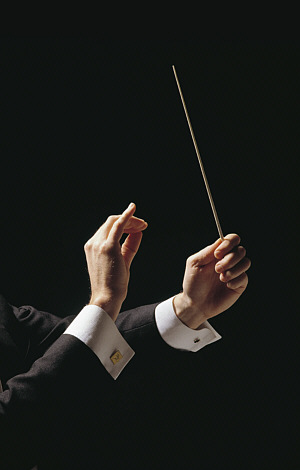
Great writing, is like an orchestra. When played correctly, all of the elements come together and form a piece of music that lifts the soul and shares an experience with all who sit to listen. However, if even one instrument is played out of tune, the piece of music falls apart and instead of sharing music, the orchestra starts making noise. So too with the writer; regardless of how well the piece is written, incorrect use of grammar, spelling, and punctuation serve as a distraction that renders it nearly impossible for the reader to chew through.

Spelling, grammar, and punctuation, when used correctly, should be almost transparent. They should guide the reader, with a sort of invisible hand, and direct them through to the central theme of the piece. Utilizing these tools correctly is an effective way for the voice of the writer to reach the internal ear of the reader. Punctuation controls flow, and can convey as much emotion as the actual content of the piece. Spelling, when used incorrectly, is confusing and takes the reader away from the content. The use of incorrect grammar to makes reading slow and more of a chore then a pleasure.

Although these were central themes in the 2010 winter term of Proof Reading and Copy Editing, the course also touched on rules that are specific to journalists. As journalists are societies modern day version of town criers, people view them as the ultimate source for truth an accurate information. This being said, the writers reputation is key as any blemish on a journalists integrity may undermine the all important trust between the journalist and the reader. The journalist must always filter through a plethora of excess information and select the most important points to create a story that is fair, as well the journalist cannot skimp on the issue of fact checking. Although news organizations are not impervious to being fooled by misinformation, it is a journalists duty to insure that beyond a reasonable doubt that information is correct, and cited properly.

Lastly, the journalist is faced on a daily basis with issues of ethics. As stated before, maintaining integrity is essential if the journalist is to maintain the all important trust relationship with the reader. However, how far is too far? The journalist has a duty to report all of the relevant facts to the public, yet at the same time the journalist must balance the rights of the individual with the public’s right to information. In the end, there are no concrete rules pertaining to ethics. Each case must be judged as an individual, as there are far too many factors that are inconsistent when chasing a complex story. First and foremost, the journalist must rule whether the information is relevant. There is no point in putting in sketchy facts if they do not add any additional color to the story at hand. Then the writer must ask whether this will in anyway cause undue harm upon any person involved. If this fate is undeserved, then it is unlikely it will ever be allowed to print.

In short, Proof Reading and Copy Editing enforced the themes of attention to detail, balance, accuracy, and ethics as central to the success of the journalist. When all of these instruments are put into play at the correct moments, and tuned properly, then and only then can the journalist achieve success in their story.

NOTE: Photo taken from Erik-Jan Geniets Photography website, link here

Also, here is comment one, comment two, comment three, comment four, and comment five.