Tuesday, April 13, 2010

E-portfolio: Google's Relationship With Journalists. Max Rausch

A couple days ago, Google CEO Eric Schmidt gave a speech at a conference to the American Society of News Editors. Megan Garber from Nieman Journalism Lab posted the highlights on the NJL blog, and the speech seemed to encapsulate much of the complicated relationship journalists as individuals and as a collective of professionals have with the mega-corporation.

According to Garber, the crowd's reaction "was cordial...but -despite the many, many compliments paid to journalism and journalists over the course of the talk- not overly friendly."

Schmidt said that Google as a company shares the journalist's attitude towards information, that "ultimately the world is a better place with more information available to more and more people." The statement is worded to imply a need for cooperation, which in all fairness does exist. After all, with more people than ever accessing news stories online (most of them by extension through Google), journalists and Google are bound by mutual interest to stay on cordial terms. Even if Google refuses to pay news publications for their content.

He also pointed out the resources journalists have had at their disposal for only a relatively short period of time (not the least of which being Google itself). "...you have more ways to report. and new ways of making money will develop." He has something of a point, although it's hard not to be cynical about his optimism, since Google's as rich as ever even as journalists struggle to get by. Still, he was correct in his assessment that the business model was the problem, not necessarily the conduct of journalists per se.


From what I can gather, even without attending the conference, there was a definite amount of truth in much of Schmidt's words, obvious tension with the crowd of journalists notwithstanding. Schmidt had a strategy to smooth over that though: unabashed brown-nosing. He described the profession as a delicate art form, exalted in optimism of lucrative business models to come (without, it should be noted, describing any such hypothetical model, and not specifying whether the said model would more profitable for journalists or Google),and even tried, however feebly, to come down off his rhetorical mountain.

"You get criticized all the time. On the left, you get criticized for being too liberal. On the right, you get criticized fro being too conservative," he said. "In our case, we just get kicked out of China. Same thought."

As a journalist, it's difficult to sympathize with a billionaire seemingly struggling for a monopoly over information distribution. But even so, there was legitimacy woven into certain parts of his speech, and he nevertheless offered a somewhat extended glimpse into what the future of information would look like. Even if you practically saw it coming already.

Image taken from here.

E-portfolio: Editing Detective. Max Rausch

As in any industry, there are various stages of production involved with journalism. The legwork done by the reporter, including the tedious phone calls, frustrating investigation, and painstaking interviews, comprises but one phase in the production of a story.

Before a story is deemed worthy for publishing (at least in the professional sector, generally if not always excluding citizen journalism) it must be subjected to the discriminating eyes of a keen editor. The editor's role boils down to acting as a check against the human failings of the reporter(s) beneath him or her. Obviously, editors are subject to human failings as well, but the more eyes and brains that assess a piece, the fewer errors are likely to slip into the final product.

Errors in the content of a story, such as unfair bias, slanted language, and gaps in the facts presented by the reporter are crucial to isolate and correct immediately, as the first impression of a story is often the lasting impression apprehended by the reader or user. However, errors of form, such as grammar and spelling also exist form time to time, often reflecting the intense pressure of deadlines upon the reporter more than the abilities of him or her to comprehend and adhere to proper linguistic conventions.

Even seemingly innocuous errors can be damaging. The lead in this political story from the Edmonton Sun tries to be creative, but forms itself on a sentence fragment in the second sentence. Thereby, the lead that was meant to hook the reader in comes off as unprofessional rather than provocative. Fairly or unfairly, readers are less likely to take the story seriously as a result, assuming they are forgiving enough to read the story all the way through.

Without asking the editor, we can't ascertain an excuse for the mistake showing up at the forefront of the story. But journalism, more than most, is an industry based on results, not excuses.

E-portfolio: Should We Need Permission to Speak the Facts? Max Rausch

Alright, let's get the obvious stuff out of the way right now. First, print is going out of style, and most people are getting their news off the Internet these days. F***ing duh. Second, the industry is still (rather feverishly) trying to figure out a new business model to appropriate the change, just as the music and book publishing industries are. If you don't know this already, there is not enough space in this post, nor enough time in my day, to catch you up.

While anyone who uses the Internet semi-regularly would be basically aware of this awkward transitional phase, you would be forgiven if some the particulars escaped you amongst the deluge of arguing tech pundits and aimless paranoia to be found online. You should know that tonnes of news is accessed via search engines like Google and even social networking platforms like Twitter and Facebook. You may not know how desperate professional journalists are to control access to those facts.

According to this article from Ars Technica, Laura Malone of the Associated Press appeared before the American Federal Trade Commission arguing for controlled access to professionally produced stories, including the necessity of licences to distribute news content form the Associated Press. The implication is crystallized in the article's headline: someday soon , you and I might need to buy a license just for the right to retweet news stories on Twitter or post them on Facebook.

Malone's statement was actually a reaction to comments made by Harvard professor Yochai Benkler. Ars Technica quotes him as saying: "You want to live in a permissions system that facts are permitted? Facts...should be as free as the air to common use. We do not have a permissions system for breathing."

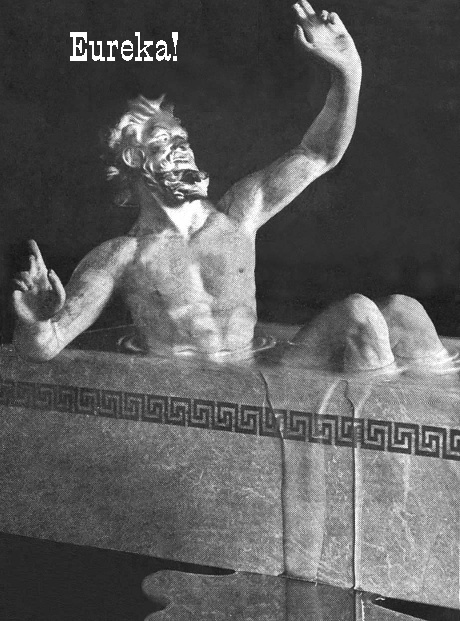
That's the dilemma for all working journalists: the right to earn money and recognition for your work versus an allegiance to free speech and open conversation. Hopefully we won't be forced to choose, and the new model (when someone finally figures it out) will suit everyone's needs. That'll be one hell of a "Eureka!" moment.

Image taken from here.

Editors as a Brand, Jesse Snyder


The Expectation of Editors


Editors are expected to write within the parameters of the newspapers that employ them. Unlike Blogging, editors of newspapers and magazines write and edit their work within the boundaries of a company or corporation. This gives them a brand name of sorts. As Katrine Sorensen wrote in her blog post, "As journalists it is important to remember that you are a professional who represents the company at all times - they own your name so to speak." This is important to remember as a journalist, but even more so as an editor. When working as a buffer for any newspaper, it is imperative to edit in a way that suits its overall layout and style. It's the editors job to promote a newspaper's image and write in a way that meets its standards.


Magazines vs. Daily Newspapers

Every major newspaper or magazine has a slightly different way of portraying the news. Magazines are inherently more eye-catching than daily newspapers, and editors working for either are given a specific way to illuminate its inherent qualities. A magazine like MacLeans, for instance, writes the same story as a daily like The Globe And Mail, but makes it a little more eye-catching or controversial than the former. When the H1N1 virus broke out in October, there was a lot of heat on the B.C. government for supposedly not being prepared enough for the potential pandemic. An article by The Globe And Mail on the scandal was entitled, "B.C. not prepared for H1N1:Report." Meanwhile, at around the same time an article by MacLeans on the same topic was entitled, "The flu shot screw-up." Every newspaper is trying to target a different audience, uses different CP style specifics, and covers certain topics more than others. It is an editors job to recognize this and edit content in a way that fits the mold of the newspaper or magazine that employs them. When it comes down to it, editors are really just advertising a brand name. They are like rats.

Note: Image from
librarian.net website.

E-Portfolio Televison Broadcast Errors Megan Perras


We have learnt to attempt to prevent errors in this class by reading and re-reading and editing our work, but the one area we have not covered where the errors can range from hilarious to disastrous is in television broadcast news.


Television reporters and anchors have had a more difficult time concerning new media and “bloopers”, simply because their mistakes are usually live. These mistakes are then broadcast on youtube, to be watched over and over again.


The situation is a lot more difficult to deal with when large mistakes are made on television, as it seems harder to correct them. Retractions are not usually used on news broadcasts, as time is generally sparse during broadcasts, and it must be used to portray stories instead of retractions.


When it comes to proofreading and copyediting in broadcast journalism, one must simply try their best to ensure that nothing is incorrect on the prompter, or in the recorded broadcasts, but human errors happen, and so do youtube videos that mock those human errors.


Here are some of the best:


E-Portfolio Final Blog Post, Megan Perras


A DOZEN THINGS I HAVE LEARNED IN PROOFREADING AND COPYEDITING:


(written in point form)


1. At first it is really difficult to put your work on a public forum when you are getting graded for it, but constructive criticism from your peers actually does make you a better writer.


2. How to create smaller links, and how to formulate a web story so that people will actually want to read it.


3. The importance of imagery and video as well as giving credit to internet sources on blog posts.


4. To read your work over and edit it more than once, because once something is published on the internet, everyone can see your mistakes. (And if they’re Proofreading and Copyediting students, they will correct it for you too.)


5. Future journalists create really interesting blogs.


6. That I write way too much volume for anyone to actually want to read the whole blog post.


7. That the internet isn’t infallible, so writing midterms on it generates extra stress.


8. The journalism debate on new media will most likely work itself out, regardless of my personal opinions on twitter, and whoever figures out a way to create tons of revenue off news on the internet will be very wealthy and may be hiring journalists sometime in the future.


9. Journalistic ethics are pivotal when writing for the internet, even though others may release more information, at least credibility will give you an edge to fight against that and retain readership.


10. I learnt that it is a really bad idea to put your full name on a blog entry in which you put a picture of a horse pooping as the main image because when someone google- image- searches your name, the first image they will see is that horse pooping.


11. I realise that although the internet is an extremely useful tool, I will most likely NOT want to write for it as a career, as at times I find myself slightly technologically challenged.


12. As a journalist, I love writing, but editing seems like too much of a "desk job" for me!
Here is a helpful and interesting read on editing:


Here are the links to all of the 5 comments necessary for the e-portfolio project:

E-Portfolio: Why I Would Do My Journalism Internship with Hunter S. Thompson Through an Ouija Board Megan Perras


Why I Would Do My Journalism Internship with Hunter S. Thompson Through an Ouija Board:


Albeit a morbid thought, I wouldn’t mind doing my internship through an Ouija board, extracting journalistic wisdom from the great late Hunter S. Thompson.


Why you ask? Besides being ridiculously obvious, the reasons are fourfold:


1. Call me a rebel, but I long to feel as if I am a part of that journalistic gonzo movement where one didn’t have to follow the inverted pyramid, the nut graph or any of the other constraints and rules that apply to journalism today. The fact is that today, a Hunter S. Thompson style journalist just couldn’t exist. Your editor would can you so fast your head would spin. Can one imagine writing something like this (courtesy of The Great Shark Hunt pg 295 Gonzo Papers Volume 1) in a political story, or column... “ There is not much doubt, on the numbers question, that at least 20 of the 100 senators will not vote to convict Nixon under ANY circumstances... unless he violates that old law of Indiana politics about being “found in bed with either a live man or a dead woman.” Nixon is not one of your more vulnerable politicians in this area. It is difficult, in fact, to imagine him being in bed at all- and especially not with anything human.”

2. The sense of adventure that was alive when you actually had to search for a story “on foot” so to speak and not on your couch perusing the internet speaks to my journalistic soul. Being a part of the story, as Hunter usually was appeals greatly. How to better tell a story then by actually actively participating in it. Although, later in life after fame set in, because of his notoriety Hunter actually said it is easier to write a story if you can observe without being noticed (and he was noticed mostly because of his celebrity). I believe that in his writing because he was IN on the action, and observed at the same time, he brought a unique and very much “alive” perspective in any article that he wrote.
An interview where Thompson speaks about how being recognizable makes it difficult to write:
http://www.youtube.com/watch?v=DvcJc2RNTVE&feature=related

3. I am sure that any lesson he would teach me would involve an element of fear. The call to explore and observe and write and take photographs is one that involves stepping out of the realm of normalcy. It involves making contact with people that you don’t really feel comfortable speaking to, and sometimes even getting in someone’s face and snapping a photo. This element of being scared and doing it anyways is really important in journalism (so says John Ulan) and this stepping out of one’s comfort zone would be best taught by a gun wielding and alcohol-induced Hunter S. Thompson. It would be a crash course.

4. Hunter S. Thompson wrote with opinion, he wrote with passion, and I am sure he wrote with many opiates, but overall, he wrote with creativity. He was a journalist who was well informed, wasn’t afraid to ask questions or look stupid. And he wrote things that were funny, things that were honest, and I’m pretty sure a bunch of things that weren’t exactly completely true (which I don’t condone), but if print journalists wrote like that today, I don’t think that there is a journalism student who would not pick up the newspaper.